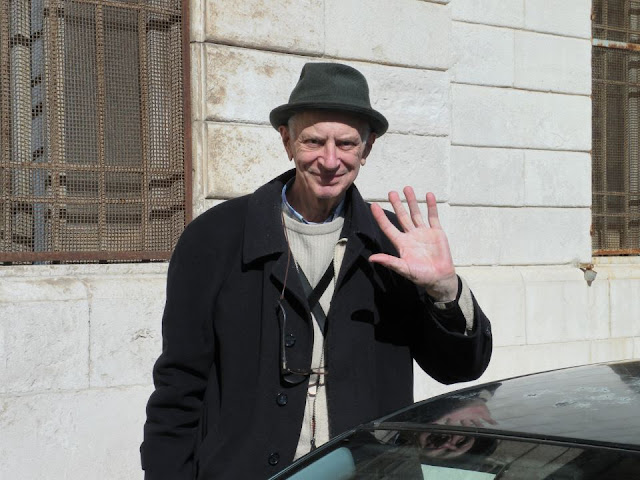
Rima Demirchyan, a silent Aristocrat at the Yerevan Polytechnic. A tribute by Carlo Coppola

articolo di Carlo Coppola pubblicato in versione italiana su "In Città Giovinazzo" diretto da Papas Antonio Calisi con il titolo "Rima Demirchyan, un’aristocratica silenziosa nel Politecnico di Yerevan" si trova al seguente link:
There are lives that do not seek the spotlight, yet radiate a light all the more enduring for its restraint. Rima Demirchyan — wife of Armenian National Hero Karen Demirchyan, scientist, educator, mother — belongs to that rare category of women whom history tends to relegate to the shadows beside great men, and who instead deserve to be remembered in the full dignity of their own identity.
Born Rima Aghasievna Karapetyan on 2 October 1933 in Dilijan, a city nestled among the forests of Tavush, she pursued her education with the quiet determination that would distinguish every season of her life. She graduated with a gold medal in 1951 from the Pushkin School in Yerevan, earned her degree with distinction in Chemistry from the Polytechnic Institute in 1957, and it was during those years that she met Karen Demirchyan, whom she married in 1955 — two years before completing her studies. A detail not without significance: Rima did not abandon her degree for the sake of marriage.
After five years as an engineer at the Armhydroenergoshin trust and a period at the Institute for Research in Inorganic Chemistry, in 1964 she joined the faculty of the Yerevan Polytechnic Institute, where she taught Chemistry for thirty-five years. An entire generation of Armenian engineers and scientists passed through her classes, studied her textbooks — among the first in Armenia devoted to general chemistry — and absorbed her capacity to transmit scientific rigour alongside something far more difficult to quantify: an example of conduct. Throughout those same decades, Rima Demirchyan was also the wife of the First Secretary of the Communist Party of Soviet Armenia, and later of the President of the National Assembly. She could have translated the privilege of that name into personal advantages, visibility, or reflected institutional power. She never did. "There were no official restrictions on the activities of the wives of prominent figures," she wrote in her book Memoirs, "but their excessive activity caused discontent." A phrase that sounds technical on the surface, yet in truth reveals an entire ethic: the conscious choice of discretion as a form of respect — toward her husband, toward the institution, and toward herself.
Artashes Tadevosyan, Deputy Director of the Institute of Mining and Chemical Technologies at the Armenian State University, who knew her in the 1970s, describes her with words of rare affective precision: "She was a woman of true aristocracy: simple, modest, reserved. She never flaunted her role as first lady of the republic." Aristocracy as an interior quality, then — in the most authentic sense of the word.
Throughout her long academic career she left lasting and tangible marks: co-author of university Chemistry textbooks, president of the Polytechnic's Women's Council, driving force behind the establishment of the institute's nursery. When Karen Demirchyan was assassinated on 27 October 1999, in the tragic attack on the National Assembly of Yerevan, Rima — who knew the names of the perpetrators and, above all, of those who ordered the killing — did not retreat into private grief. She founded and led the charitable foundation bearing her husband's name, and in 2012 published Memoirs: an act of preservation, at once of Armenian history and of personal remembrance.
Her daughter-in-law Tamara Sirunyan — herself from one of the most distinguished professional families in all of Armenia, and today director of the same Foundation — has entrusted to public memory perhaps the most moving words of all: "It was a great honour to have a mother-in-law such as her, from whom I learned the art of keeping the family hearth alive, living with dignity and moderation. The image of Rima Demirchyan will remain for me a vivid example of an Armenian woman, mother, and guardian of the family — always composed, of great moral stature, and a bearer of the highest values."
On 17 May 2026, the National Polytechnic University of Armenia dedicated to her an article entitled Ռիմա Դեմիրճյան. Պոլիտեխնիկի վաստակաշատ դասախոսի գիտամանկավարժական և մարդկային անջնջելի հետքը — "Rima Demirchyan. The indelible scientific, pedagogical and human imprint of a distinguished lecturer of the Polytechnic" — recognising in her not the wife of a great Armenian, but an exemplary figure in her own right: "in whose image strong will, scientific intellect, and feminine grace blended harmoniously."
We, too, have had the honour of knowing tikin Rima, and her daughter-in-law Tamara, wife of Stepan Demirchyan — a man who, among the very few, would be fully deserving of leading the Republic of Armenia at its highest level. The pillar of the Demirchyan family is its women: professionals across many fields of knowledge, vivid embodiments of that rare aristocracy which has all but vanished from the world, figures of powerful dignity who gather unto themselves the immense patrimony of History and, in industrious silence, with their integrity intact, hold together family, culture, and memory.
Carlo Coppola