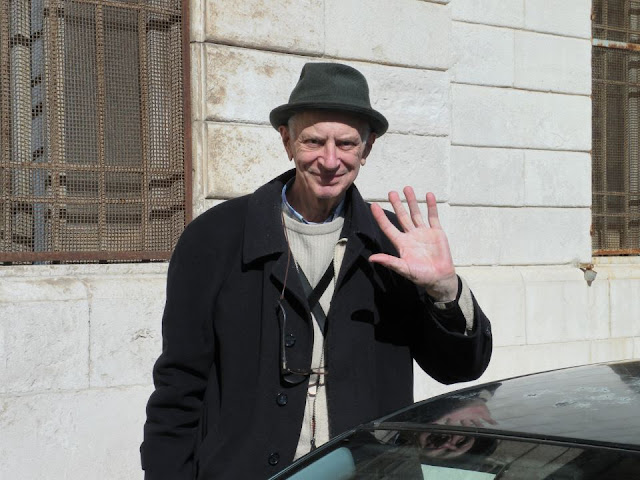
"Azerbaijani Propaganda in Italy: Between Aggressive Lobbying and Guilty Silence" article by Carlo Coppola

La versione italiana di questo articolo di Carlo Coppola si trova su "La Fiaccola" diretto dall'avv. Paolo Scagliarini al seguente indirizzo https://www.lafiaccola.it/wp/armenia-quando-difendere-la-storia-diventa-una-lotta/
«Ադրբեջանական քարոզչությունը Իտալիայում. ագրեսիվ լոբբինգի և մեղավոր լռության միջև»: Կառլո Կոպպոլայի հոդված.
The recently published study entitled Courting Influence: Azerbaijan’s Lobbying Network in Italy — a most commendable work by Jelena Melikyan on Azerbaijan’s lobbying apparatus in Italy — offers a lucid and detailed analysis of a phenomenon as concerning as it is now entrenched: the systematic use of academics, journalists, and cultural institutions to promote the official narratives of the Baku government within the European context.
What emerges is a complex, sophisticated network, firmly embedded in the fabric of Italian public discourse, capable of influencing the media, academic environments, and even events organised in religious and institutional contexts — as evidenced by the recent conference hosted by the Pontifical Gregorian University, which, it is worth recalling, despite its location in Rome, is an institution of the Holy See (i. e. the Vatican).
This propaganda machine — long and aptly described as part of “caviar diplomacy” —moves with determination to rewrite the history of the Caucasus, particularly that of Nagorno-Karabakh, seeking to erase the Armenian cultural and historical presence through well-structured disinformation operations. An example of this is the journal Opinio Juris, which continues to promote the revisionist concept of “Western Azerbaijan”, while the systematic omission of the humanitarian crises endured by the Armenian population is but one of several clear signs of a broader attempt to legitimise Baku’s narrative at the international level—alongside the appalling silence surrounding the destruction of millennia-old Armenian cultural heritage in Artsakh and Nakhichevan.
Alongside this rightful and necessary denunciation, however, it is imperative to reflect on another too-often overlooked aspect: the prolonged silence and limited effectiveness of Armenian institutions and the global Armenian diaspora in the face of all this. Though the matter has been raised and condemned in favour of Armenia at the highest international forums, little has been done to respond effectively.
As Azerbaijani propaganda in Italy becomes increasingly aggressive and pervasive, many critical voices that have for years exposed this cultural and informational decline remain unheard—ignored even by the authorities in Yerevan. Articles of various kinds, both systematic and sporadic (“intervalla insaniae”), have been published across online and print media for at least the past fifteen years. Journalists and scholars such as Emanuele Aliprandi, Simone Zoppellaro, Grigor Ghazaryan, Letizia Leonardi, and Carlo Coppola — merely to name those with whom we are personally acquainted, with no intention of slighting others — have repeatedly raised the alarm, produced investigations, published articles, and sent letters to the Ministry of Foreign Affairs of the Republic of Armenia, containing detailed reports and direct or indirect warnings, oral, written, and recorded, all of which can be verified. These individuals have even organised public interventions to denounce the pervasiveness and danger of the Azerbaijani influence network in Italy. Yet their voices have all too often fallen on deaf ears.
In the past, figures such as former ambassador Sargis Ghazaryan and former ambassador Tsovinar Hambardzumyan did all they could — out of duty and with institutional dignity — to raise awareness among their Italian and Armenian superiors. However, their efforts remained isolated, lacking the determined support of the broader political and institutional system needed to grasp the magnitude of the informational challenge at hand.
We are confident that the current Armenian ambassador to Italy, Vladimir Karapetyan— himself very active, though in post only for a few months — will also make his voice heard, in the appropriate venues and forms. Today, while many express outrage at the promotion of revisionist narratives and the manipulation of ancient history — manipulations which go so far as to deny the writings of Herodotus and Strabo — it is disingenuous to feign surprise.
All this had long since been forewarned. Much of it had already been denounced. Further denunciations continue to go largely unheeded across television interviews, radio broadcasts, and printed appeals.
It is precisely in this political, moral, and strategic vacuum that Azerbaijani cultural diplomacy has flourished — constructing academic alliances, legitimising pseudo-research, and promoting events in which Armenian identity, culture, and memory are denied. This is not merely a problem of propaganda: it is a problem of the absence of a decisive counter-narrative, of a lack of will and vision in defending, with due firmness, historical truth and the rights of a millennial community.
The Armenian people, both in Armenia and in the diaspora, have the right to see their history correctly represented in every sphere — from popular and everyday spaces to the halls of power; the right to see their cultural heritage defended; the right to count on institutions that will not remain silent as all of this is eroded and rewritten.
It is time for Armenia to shake off its inertia, for the Armenian academic and diplomatic worlds to assume their responsibilities, and for civil society and public opinion to finally be heard from the grassroots. The civic battle for truth can no longer be fought by a few isolated, courageous individuals — some of whom, in the past, have even received threats and warnings, including documented surveillance in 2012 (the year of the conference and anniversary of the poet Hrand Nazariantz in Bari) and in 2015 (the centenary of the Armenian Genocide in various cities, including Florence).
What is needed is a network, a common front, and — above all — the courage to react and to demand that a third country like Italy cease this collusion, under penalty of diplomatic rupture and recourse to the International Court of Justice — measures that, it is worth noting, have been threatened for far less in recent memory.
We have spoken of all this — also personally —for many years, and shall continue to do so with Armenian journalists, associations, and foundations (e. g. the Geghard Foundation) and with all those with whom we have maintained dialogue over at least the past decade. For years, press officers, advisers, and consultants of the Ministry of Foreign Affairs of the Republic of Armenia have ignored our numerous appeals, often without the courtesy of a reply, sometimes dismissively suggesting we not repeat “a pointless refrain”.
We remain hopeful that, for once, our request for a “courteous inquiry” — if not for a “brotherly change of pace” — may at last be received positively, even by complex and hierarchical institutions such as the ministries themselves.