"Armenia and Bulgaria: an Agreement beyond the ephemera of Diplomacy" by Carlo Coppola

Not all agreements are born in the halls of diplomacy. Some take root in something older and more enduring: in a shared prayer, in a recognized martyrdom, in a cross held high against the same oppressor. Armenia and Bulgaria have known this for centuries. The former adopted Christianity as its state religion in 301 AD, through the mission of Gregory the Illuminator; the latter, baptized into the Orthodox faith in 864 AD under Prince Boris I of Bulgaria, became a bastion of Christian civilization in the Balkans, preserving it against Ottoman pressure with the same tenacity with which Armenians would defend their ecclesiastical identity in the centuries to come.
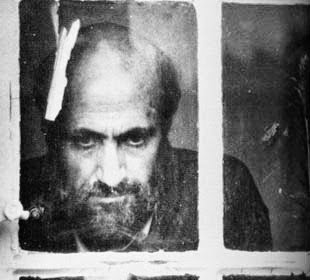
This fraternity also found concrete expression on the battlefield. In 1912, the Armenian general Garegin Ter-Harutyunyan fought in the Volunteer Corps of the Bulgarian army against the Ottoman Empire for the liberation of Thrace and Macedonia. For his courage, he was awarded the Bulgarian Cross of Valor. Bulgaria was not merely a theater of war for him; it became a second home. In Sofia, he married Epime Sukiasyan in 1935, and their union brought forth a son, Sukias-Vrej. It is a love story born amid the ruins of war and shattered by the violence of history: in 1945, his wife and son were exiled to Pavlikeni, where Epime died of tuberculosis in 1958; Sukias-Vrej chose instead to remain in Sofia, where he passed away in the early 2000s. Ter-Harutyunyan himself never returned: lured into a trap by the Soviets, he was arrested, deported to the prison of Vladimir, and died there. To this day, he is remembered in Bulgaria as a symbol of freedom and resistance, his tragic fate embodying the profound human bond between two peoples—a bond no treaty could ever invent or replace.
There is, therefore, a date that Armenian-Bulgarian diplomacy will hardly forget: May 3, 2026. The Armenian Prime Minister Nikol Pashinyan and the Bulgarian President Iliana Yotova signed in Yerevan the Joint Declaration on Strategic Partnership between the two countries—an unprecedented document, the first in bilateral history, which gives diplomatic form to what shared faith and blood had already inscribed over the centuries. President Yotova had arrived in Armenia to attend the 8th Summit of the European Political Community, welcomed at Zvartnots International Airport by Armenian Deputy Prime Minister Tigran Khachatryan.
This achievement bears, to a significant extent, the name of Tsovinar Hambardzumyan, Ambassador Extraordinary and Plenipotentiary of Armenia to Bulgaria. Appointed in Sofia in December 2024, she assumed her duties with the explicit commitment to strengthen and deepen relations between the two countries. The challenge was far from easy: Bulgaria was going through a phase of technocratic governance, naturally reluctant to undertake binding diplomatic steps. Yet, with methodical patience, the Ambassador laid the groundwork for the signing, inaugurating in July 2025 the Armenian-Bulgarian Chamber of Commerce and Industry and initiating a structured dialogue with Sofia’s political and economic leadership. The Bulgarian Council of Ministers approved the text of the Declaration only a few days before the summit—confirmation that the ground had been carefully prepared, with vision extending well beyond mere good intentions.
Two peoples who have upheld the cross at the cost of exile and blood now choose, together, a European future. This is not merely politics: it is vocation.
By Carlo Coppola